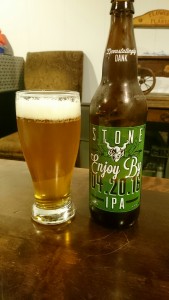
Nice sweet hop aroma. Good mouthful of sweet tropical hop flavor. A bit of hop aftertaste but not much.
4.5 Out of 5 stars.


Nice sweet hop aroma. Good mouthful of sweet tropical hop flavor. A bit of hop aftertaste but not much.
4.5 Out of 5 stars.
Spicy aroma like cracked pepper. Tastes like jalapeños or something.
3.5 Out of 5 stars.

No real aroma. No real hop flavor. Maybe it tastes like nectarines.
4 out of 5 stars.

Faint sweet hop aroma. Slight puckering hip sweetness that intensifies with successive drinks. A bit of a malt balance at the end, finishes fairly clean.
4.5 Out of 5 stars.

Says bottled on 3/14/16 so it’s amazing the freshness expected, with just a little over a month shelf life. Nice aroma of fresh, sharp hops. Crisp hop bite with a bit of a sweet aftertaste that’s a bit tangy. If “dank” means halfway between resinous and fruity, that’s how I’d describe this.
4.5 Out of 5 stars.
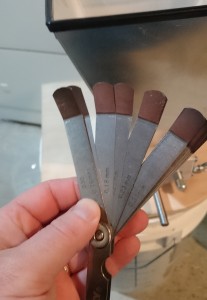
If you crack your own grains (and I recommend you do- see my opinion why), here are a couple of tidbits I’ll pass on that I learned the hard way. They both have to do with roller adjustment. When I first got my grain mill, the instructions suggested getting a set of feeler gauges to set/adjust the roller gap to, in order to define your grain crush. I thought this was a superfluous detail and I would just eyeball it. I found after my first setting was too large that it was actually quite hard to tell by eye if the gap was the right size to crack the barley husk without pulverizing it to dust.
Really the only way to tell was to run a batch of grains through and look at what was coming out the other side. If too much or not enough, adjust accordingly. Making these adjustments by eye was quite tedious as I would continually overshoot or undershoot my mark. In the end, my efforts to try to simplify things by skipping the feeler gauges was actually making it harder for me. So I bought a set and figured out what seemed to be the right setting.
In the process of these adjustments, I got burned by the lock nuts on the adjustable roller. The mill was set up with a dial on both ends of one roller to dial it in closer or further away from the other roller. Then it had two locking screws to turn in tight to keep the roller in position. Stupidly, these locking screws have a nut threaded onto them, that cause you to bottom out your tightening screw against the nut and not actually be locking the roller into position. I found this out after seeing a batch of kernels go through and not actually get crushed properly.
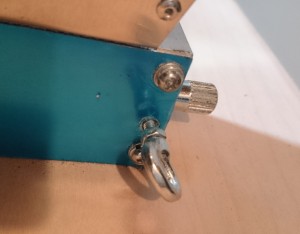
I have no idea the intended purpose of these nuts. I had initially thought they were to keep your adjustment screws from backing out once you locked them in, but that’s not the case. They way they’re set up, they only function to prevent you from fully locking your adjustable roller into place, but don’t prevent your roller from backing out and increasing the gap as you grind. So word of advice, just back these nuts way off and get them out of your way so you don’t get burned like I did.
Very nice strong hop aroma. Full mouth flavor of slightly sharp, slightly sweet hop flavor. Aftertaste is very strong hop resinous flavor, with a kind of grapefruit tartness that lingers.
3.5 Out of 5 Stars.
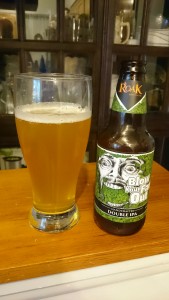
About a year ago, I decided to buy a grain mill and crack my own grains. I figured if I tried to explain it to anyone they’d think I was crazy spending $100 for a grain mill to add another labor step to my brew day preparation when the homebrew shop would do it for free. At the time I did it because I was feverishly trying to sort out my grain conversion efficiency. I had a particular batch that had a low conversion efficiency, and after inspecting the spent grain after mashing I noticed a lot of the kernels were still intact, and hadn’t even been cracked. I decided if I really wanted to be in control of what was going on, I couldn’t be victim to whether or not my grains were fully cracked coming from the homebrew shop.
Ever since making that decision, I’ve felt it was money well spent as I felt more in control of the whole process (which is partly what drives us all to move from extract to all-grain to begin with). While cracking a batch of grain recently for a Scotch Ale, I would crack the grains and inspect to make sure I was getting a good crush- cracking all/most of the hulls but not turning things to powder. All was going well as I worked through Munich, White Wheat, and Smoked Wheat. But when I went through the Golden Promise, I found that maybe only 50-60% of the kernels were cracked.
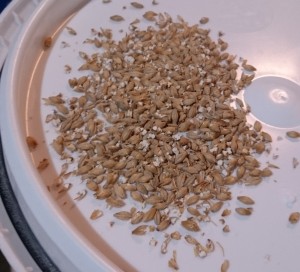
I adjusted the roller to do a finer crush and re-processed it all. In hindsight, if I was smart, I would crush all of a given grain in a bucket then then after inspecting the crush move it over to the brewday grain bucket. But in this case, having not learned that lesson yet, my half-cracked Golden Promise sat on top of the rest of my nicely crushed other grains. Having no option but to crush it all again on the finer setting, it all went back through the mill. I got a nice crack on the Golden Promise, but a lot of the other got broken up into very small bits. 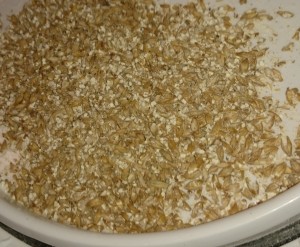 I added some rice hulls to help avoid a stuck mash with such a fine crush and was prepared for brew day.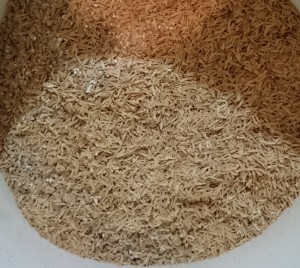
Had this batch come through my LHBS, I’m sure it would’ve all been run through a fixed roller setting and I’d be stuck with low conversion efficiency.
While cracking this batch of grains, I found another reason cracking your own grains is worthwhile. Frequently while going through this 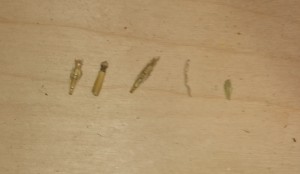 grain processing you find little bits of bonus grain bits that you can filter out (grain stock other than the kernel), but this time I found an unknown hop pellet sitting in my package of grains.
 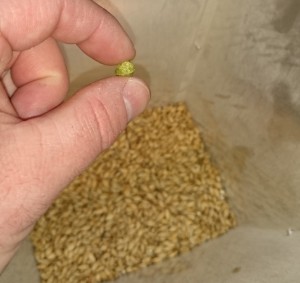 I have no idea what type it was, how old it was, etc. I just know I was glad I found it and it didn’t get ground up to be a bonus/mystery flavor in my Scotch Ale. Making a small 2.5 gallon batch that was also low in IBU, one hop pellet could make a noticeable difference.
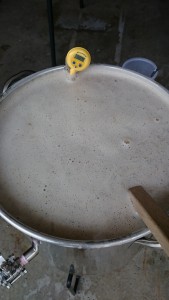 If you’re doing a multi-temperature mash by adding heat to your mash tun, you need to be wary of heat plumes fooling your thermometer. I have an 8 gallon pot with a false bottom that I use for my mash tun. When I do a multi-temperature mash, I monitor the temperature of the grain/water mash as I’m adding heat. Occasionally I’ve been thrown into a panic as my temperature seemingly shot past my target temperature.
However, if you’re not running some sort of recirculation pump you need to be wise to these tricks and give your mash a stir to ensure the hot water at the bottom gets mixed in to the entire mash instead of just finding an escape route to the top past your thermometer probe.
Similarly, when first mashing in your grain to your hot water, you need to give it about 5-10 minutes to totally equalize and balance out the temperature between grains and water before trying to adjust temperature up or down. I’ve had situations where it was location of the thermometer probe giving me an inaccurate temperature, or sometimes just simply giving things a chance to fully mix and stabilize.
 Draught Horse Brewing has a nice set-up. In a spot on its own surrounded by some woods it has a kind of peaceful feeling even though it’s just West of a busy business center area at a major I-96 exit. We went at night to try some beers on a Thursday night and found it to be quite busy. They had what looked like a very interesting food menu, but they also had a great list of beers on tap. There were many that I wanted to try so it was tough to figure out a starting place. A wide range of styles to appeal to all beer drinkers for sure. The beers were all very well made with great flavors. I had some awesome IPAs and Pale Ales with some awesome fruity hops.


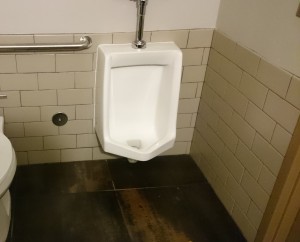
One thing that stood out was this place was very family friendly. As a parent with 2 young boys, it’s nice finding a place that welcomes kids and doesn’t make you feel like a social pariah for wanting to have a meal at a brewery with your family. Heck, they even have a special day of the week when kids meals are discounted. I didn’t have the boys with me the night we visited, but there were a lot of young ones sprinkled throughout. One thing that sealed it in my mind that this was a place that definitely had kids in mind was the boys bathroom. Toilet & urinal as usual, but the urinal was nice and low for easy access. It may seem trivial, but as a father of young boys, a urinal that can be reached is always a sign of family-friendliness I’ve found.