 There are a lot of things to do before your brew day to ensure you’re prepared and not scrambling around at the last minute. One of those things is to check the Alpha Acid (AA) % of your hops you’ll be using for bittering.
Most brewers are familiar with the equations, or at least the concept thereof, for how to calculate a beer’s IBU based on the AA of the hops you use and when you add them. As you geek out more into this topic and research it, you can quickly find your eyes glazing over as people are babbling on about chemistry reactions and throwing around terms you’re pretty sure they don’t even know what they mean.
From the higher technical analysis of those more chemistry-smart than I, here’s the takeaway that seems to be of practical use. When trying to substitute hops in a recipe, you should get particular about matching the IBU contribution from your bittering hop additions, and for the flavor & aroma additions, try to match the amount/weight.
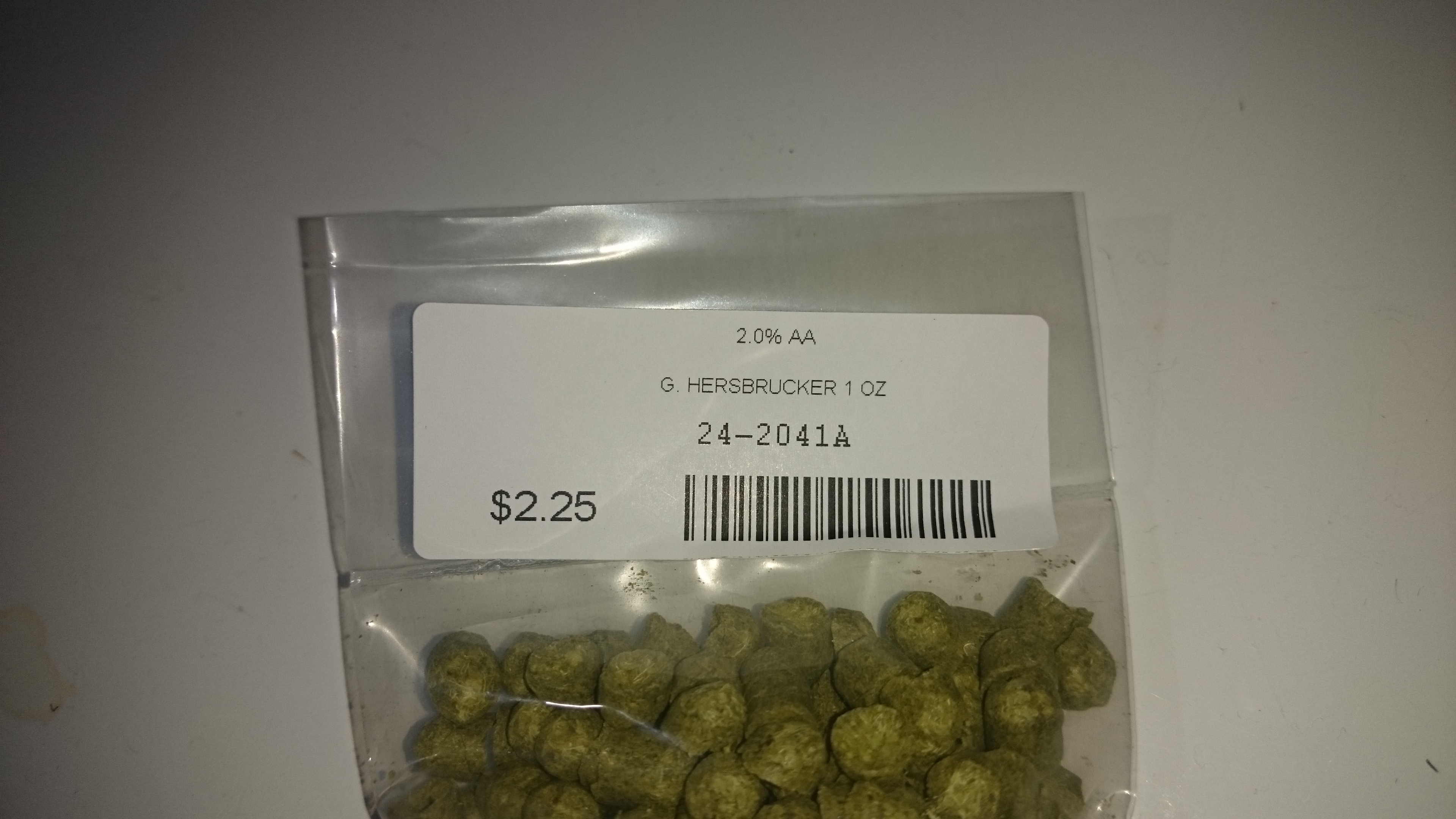
Since hops have a range of typical AA% from batch to batch, you should always check the AA% of the hop you bought from the Local Home Brew Shop (LHBS) and tweak your recipe with your brewing software to get the proper amount of hops to add to get the IBU contribution your recipe is aiming for.
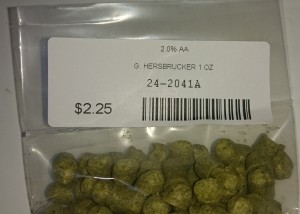
And more importantly, it’s a good idea to do this a couple days before brew day. When you find your bittering hop addition that was planned to be 0.7 oz. of 4% AA Hersbrucker, now needs to bump up to 1.4 oz. since the Hersbrucker hops are running at 2% AA from the LHBS, you’re stuck. Your little 1 oz. packet of hops that previously was going to have some leftovers, now is short and you need to get another one. Discover that on brew day and you’ll have no option but to short-change your recipe on the fly and see how it turns out. Sometimes this creates something unexpectedly good. Other times it results in exactly what you would expect, which is not what you were aiming for when you planned the recipe.